Study and Site Print Materials

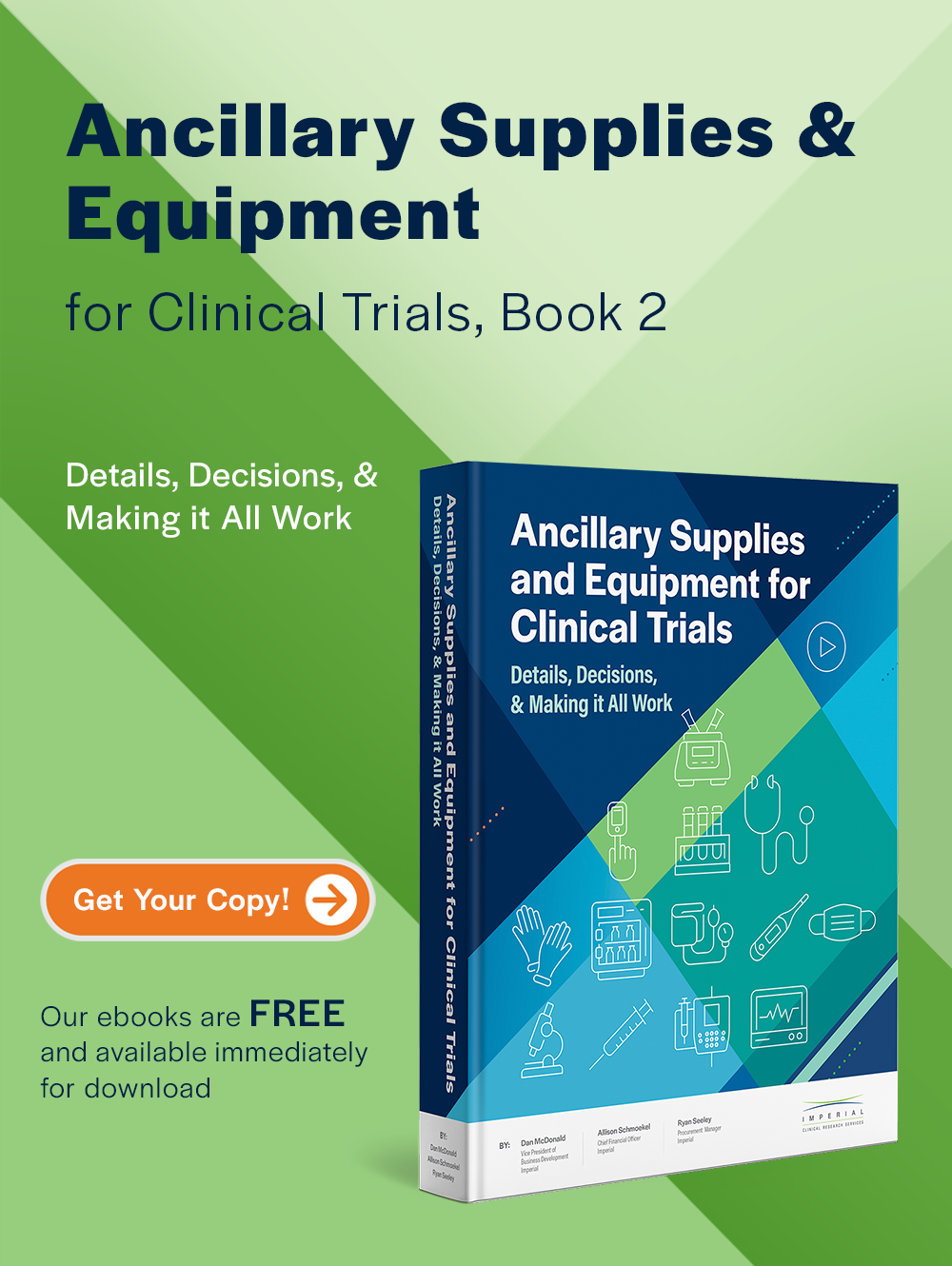
Ancillary Trial Supplies and Equipment

Clinical Trial Translation Management

Clinical Trial Patient Engagement

Meet Your Study Goals Without the Hassle
Combine 6-8 suppliers into one and simplify life for your study operations teams.
Contact Us
Just-in-Time Printing for Clinical Trials: A Smarter Approach
Clinical trials change over time, and printed materials often need to change with them. Our latest blog explains how just-in-time printing for clinical trials can help sponsors and CROs reduce waste, ease storage burdens, and stay aligned with current study needs.
The Impact of Ancillary Supplies in Clinical Trial Planning
Ancillary supplies & equipment are getting much more attention across supply teams, and this is changing how clinical studies are planned and executed. At a recent conference, the conversations around ownership, definitions, and the global movement of non-drug materials were louder and more consistent than in past years. Delve into the blog for insights on why ancillaries are moving from background noise to a real point of focus.
Translation & Localization in Clinical Trial Materials
In global clinical trials, accurate translation is essential. But accuracy alone does not always make study materials clear or usable in the region where they will be used. Our latest blog explores when translation is enough, when localization is essential, and how both support clearer communication across global trials.